Thursday, August 11, 2016

Quality Time Outdoors

Last weekend my oldest son and I had about 24 hours to head up to the cabin at our family farm in rural northwest Missouri.  We had a few things to get accomplished and none of them were pressing.  The most important thing was to hit the water and try to catch some largemouth.  A cold front came through last Friday that dropped temperatures and brought in a north wind.  Regarless, we had a chance to go fishing and we did so with the hope that regular fishing rules about post front conditions and not going forth with wind from the north don't apply as strongly to farm ponds.

Right off the bat, my son cast out his push-button reel with a John Deere mini jig under a bobber.  He claimed he had a fish but I was pretty sure that he was caught in some grass.  I was wrong.  Way to go son!


After that excitement, we started to work a plastic worm on the edges of grass that extended from the banks to the main body of the lake.  I was happy to hook the bass and Mason was glad to reel them in.  He did a great job landing a nice 2 pound bass and beamed with pride.  This was the biggest fish he has landed in his life.


We then decided to take a break from fishing and hang some trail cameras for the upcoming deer season.  We hung two cameras and in the process came across a young 7 point buck that seemed less spooked by our presence and more confused.  He slowly trotted away while occasionally looking over his shoulder.  We capped things off by pouring some plaster in a deep deer track and prying up the cast after it had dried.


The rest of the night included roasting hot dogs, making coyote calls, and telling ghost stories.  The smell of skunk woke us up at 5:20 and we decided to sleep in about 10 more minutes to avoid a secondary spraying.


I ended up catching one bass on a fly rod using a popper but working a plastic worm along the grass edges provided 6 more bass.  Mason also did a great job running the boat for the rest of the morning and put me in position to land more fish than I could have by myself.  The morning concluded by cleaning all of our fish for the owners of the lake.


While we didn't have a lot of time in terms of quantity, we sure made the most of it and made it quality.  I hope that he is able to look back on times like these when he is older and smile because I know I will.

Wednesday, August 10, 2016

Why Is There a Stereotype That You Have To Be Rich to Fly Fish?

Oooooooooh.  Yep, that makes us look like rich, stuck up snobs.  Thanks for furthering the stereotype Bentley.


Link to full Field & Stream article: Bentley Unveils Absolutely Nuts $300K Flyfishing SUV | Field & Stream

Tuesday, August 9, 2016

Austin's Trip to Yellowstone

If you frequent this site, you have probably seen pictures and stories about Austin.  He has been featured in carp fishing posts and won the first year anniversary give-away.  He also recently went on a two week trip to Yellowstone National Park and documented his trip for this website.  I am incredibly proud of him as a fisherman, a person, and a writer.  I have told him for years now that he could make a career of fishing and writing and I am proud to have him be this site's first guest writer.  I hope you enjoy hearing as much about his trip as much as I did.  It sounds like a trip of a lifetime!

Intro: A few weeks ago, I left for a 2 week trip to Yellowstone National Park with Lillard Fly Fishing Expeditions, an adventure education company specializing in wilderness fly fishing trips for teens. The trip started with 12 teens, including me, meeting up at Jackson Hole Airport. From there we spent a night at a local campsite before the long drive to Yellowstone National Park. The following rivers and lakes were locations that the group and I fished during the trip:

Madison River: The first location we fished was the Madison River where we caught Whitefish and Brown trout with streamers and dries. An incoming storm left us with little time, so we did the best we could in the short, windy period.


Grebe Lake: Next, after a hike up to Grebe Lake, we waded into waist deep water to throw streamers, nymphs, and small dries to rising Grayling and Rainbow trout. We arrived around noon and fished the rest of the day. The strong winds made dry fly fishing almost impossible so we stripped in wooly buggers and hares ear nymphs to entice the small Rainbows and Grayling hiding in the lake. Later that evening, the wind died down and the bugs came out, causing the fish to start rising. As a result, we tied on Griffith's Gnats and Elk Hair Caddis' to match the hatch. After pulling out tons of little Grayling, we crawled into our tents before hiking back the next morning.


Tower Creek: The following location was Tower Creek, a small stream filled with hungry little Brook and Rainbow trout. We threw small stimulators and Elk Hair Caddis' all day with fish rising to them almost every cast.


Cache Creek/Lamar River: Later we hiked up to a backcountry campsite near the confluence of Cache Creek and the Lamar River. Here we caught our first Native Yellowstone Cutthroats, a beautiful little trout with bright orange slashes under its gills. The smaller fish were hiding in the pocket water of Cache creek, anxious to hit dries while the bigger fish were sitting at the bottom of the deep pools of the Lamar River, waiting for a big streamer to cross their path. We stayed at this campsite for 2 nights before heading to our next location.


Pebble Creek: At Pebble Creek we caught more hungry little cutthroats in the middle of a deep, rocky canyon. The next morning, half of the group left for Slough Creek while the other half would stay at Pebble Creek another night.


Soda Butte: While the other half of the group hiked up to Slough, my half stayed at the campsite and fished the Soda Butte. The Soda Butte was filled with deep pools where I was anxious to throw some of the articulated streamers I had been tying. I picked out a big fly and started to strip it near logs and other structures and pulled out lots of big cutthroats. One big fish even jumped out of the water after my fly right when it hit the water.


Slough Creek: The next day, my half of the group made the long and steep hike up to the second meadow at Slough. After setting up my tent, I walked down to the stream and tied on the black streamer that I had caught fish on the previous day (The fly earned the name "Blackie Chan"). I caught a fish on my first cast and I knew that it was going to be an incredible day. Fish after fish swiped at our flies and everyone caught some very large fish. At the end of the day, everyone was telling stories of all the fish they had caught and we couldn't wait to the float the Snake River.


Snake River: The last fishing trip of the expedition was a guided float on the Snake River by World Cast Anglers. We fished from drift boats and caught lots of Fine-Spotted Cutthroats. All of the fish were caught on hoppers and s​treamers and the trip could not have ended in a better way.

Monday, August 8, 2016

Small Lake Profile- Hartell CORRECTIONS

I owe a huge apology to everyone that reads this site.  I have made some BIG mistakes in a post that I wrote about two weeks ago and I need to correct my errors.  Hartell Conservation Area has undergone some BIG changes since I fished there last and the MDC website does NOT reflect some of those changes.  Other errors that I made came from not visiting the area in the last few years and that is all my fault and I should have done a better job checking my facts prior to posting.  I apologize profusely if you fished this area under false pretenses but I am here to set the record straight.

No Longer Catch & Release
I stated in my previous post that the area is catch and release only.  This has changed and is no longer the case.  While the requirements for largemouth bass are very conservative at 2 bass over 18 inches, the other limits are more liberal.  20 sunfish and 30 crappie are allowed which would elude to the idea that these lakes might no longer be managed as trophy areas for anything other than bass and even that is up for debate.

Not a Boat at Every Lake
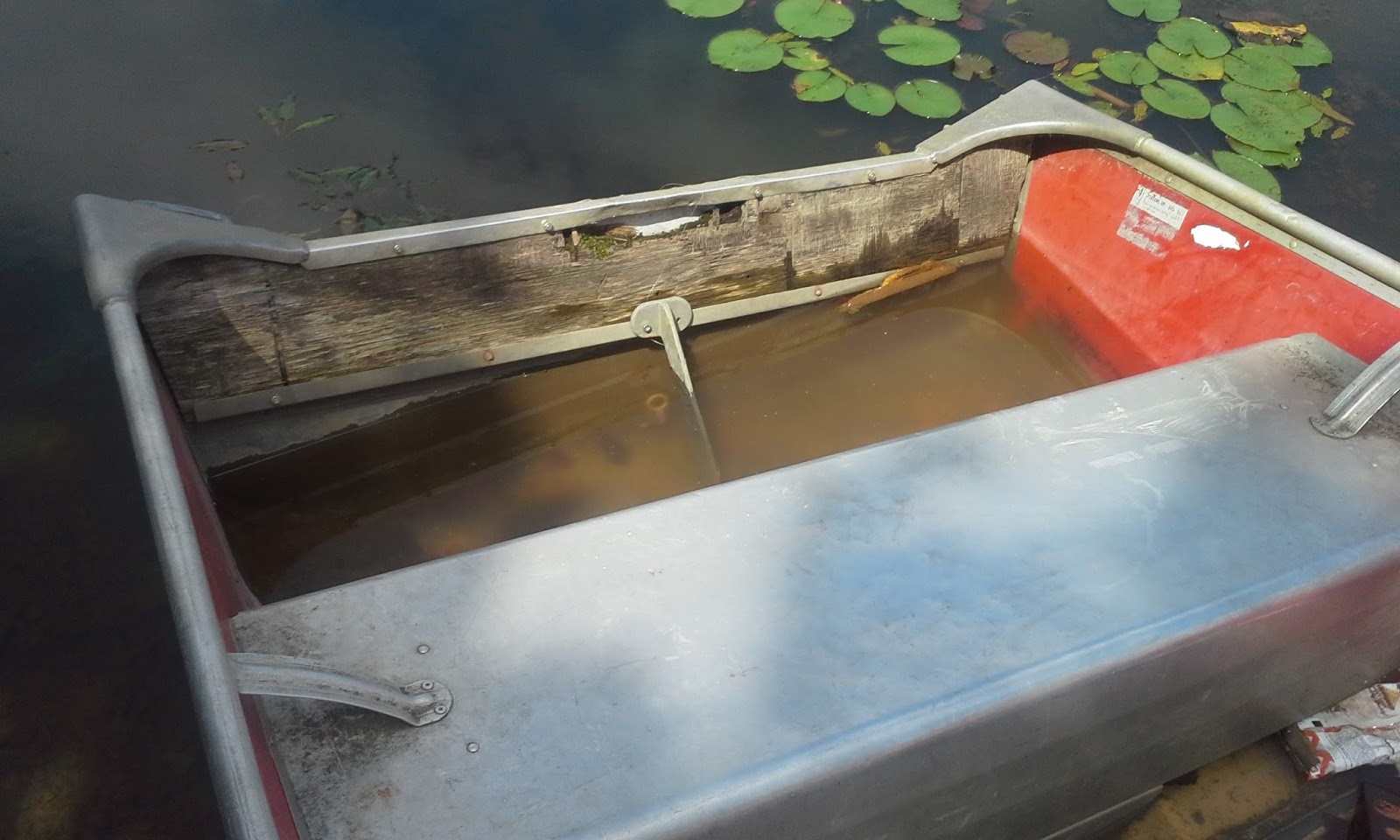
Below, I am including a picture and caption from each lake.  You can see that Redear Lake does not have a boat, Lunker Lake doesn't need a boat, and Picnic Lake has two boats.  Most had a large amount of water in the bottom of them as a result of the rain we had last week but I would have hoped that whoever mows the area would have drained them.
Redear Lake- no boat but looked like it was in good shape.

Another picture of Redear Lake.

This would be a great lake to put a boat on.

The Missouri of Conservation website claims that Lunker Lake has a low population of fish due to a recent fish kill.  Since the lake has been drained, I guess that explains why the low populations.  I guess the only thing you can fish for is grass carp.

This lake was pretty well scummed over but this could be paradise if you like to fish a hollow bodied frog,

Quite Lake...looked pretty quiet.

Quiet Lake

There WAS a boat at Quiet Lake but it also looked like a breeding ground for the Zika virus.

Picnic Lake looked like it had some serious potential.

Picnic also had two boats available.

Boat 1 had a shallow end...which looks nice.  I bet the water was warm.

Boat 2 was pretty dry but the oar locks were broken (not pictured).
Not Only for Flies & Artificials
I could not find any signs or indications that only flies and artificials are allowed at the lakes.  I'm not sure when this changed but wish it hadn't.  So much for a fly fisherman's paradise.

Lunker Lake is Drained
As you can tell in the pictures above, Lunker Lake is more like Lunker Prairie now.  I wish the website would have said that it was drained rather than mentioning that there was a fish kill.  At the same time, I never caught squat in that lake anyway so whatever.

Friday, August 5, 2016

The 2016 Norman J. Herndon Herndon Crappie Classic


I  had the honor and privilege last weekend to go down to Truman Lake with my dad and attend the Norman J. Herndon Crappie Classic.  My dad had wanted to attend this event with me for a couple of years now and we were finally able to make the trip even though we did not compete in the tournament.  The tournament benefits the Norman J. Herndon Scholarship that is annually given out to two recipients in the Kearrney School District.  I graduated from Kearney and my parents still live in town and are involved in the community.  Needless to say, my hometown means a lot to me and I have a special place in my heart for all things Kearney.

Norman Herndon, the great grandson of Norman J. Herndon holds up a crappie that would have made his namesake proud.
Upon arrival, I was greeted by Rick Herndon, son of Norman Herndon.  I hadn't seen Rick in years and felt a swelling of emotion after seeing my old baseball coach.  It wasn't long before I got the chance to see Rick's son Topher (the shortened version of Christoper) Herndon.  Topher and I played baseball and football together in middle school, we graduated together, and our dads are close friends.  Over the course of the day I was lucky enough to run in to many more old friends and Kearney-ites.  It was a fun day that included reminiscing about old times and hearing about changes that I missed out on in our time apart.

Scholarship information

Trophies and raffle information

During the tournament and after the weigh-in, I was educated about the life of Norman Herndon and a brief history of the tournament and scholarship.  Mr. Herndon was the superintendent of the Kearney School District for 17 years and was a lifelong educator.  Upon his retirement, he and his wife moved to Warsaw and he spent a lot of time fishing on Truman Lake.  He was involved in many community service efforts and freely gave of his time and leadership.  Everyone that spoke of Mr. Herndon had a tone of reverence and humility and it was obvious that he meant a great deal to his family and the lives of others.  It was obvious to see why this man has a scholarship named after him and why he remains a symbol as well as an example to others.  Mr. Herndon touched many lives for many years, and continues to do so even today through others that honor his memory.

A mess of crappie caught by one boat during the day.
As far as the fishing, most returning boats claimed that the fishing had been tough and that there was only about an hour of real action.  Boats were allowed 2-3 man teams and a total of 7 crappie were weighed per boat.  There were some really nice crappie brought in with many going over a pound.  The winning team had a combined weight of 6.67 pounds which was more than a pound better than the runner up.

Brian Miller with a crappie that went over a pound.
He wanted it noted that his brother did not catch a fish that was larger on this particular day.
The tournament raised money for high school seniors, gave out trophies, sold a case of Stag beer for over $30 during an auction, and provided an outstanding buffet of fresh fish and homemade dishes.  However, this was only a portion of the event and there was a camaraderie among anglers and family members that made things feel more like a reunion of sorts.  I think in a lot of ways, this aspect of the day was almost as important as anything else.  For a tradition like this to really take hold and continue for years to come, people need to enjoy the entire experience and not just the fishing.  It appears that the family and participants have a tradition on their hands that will last for years to come.

My buddy Jeff with a basket full of nice, Truman Lake crappie.
Next year, my dad and I plan on fishing in the tournament and I hope you consider doing the same.  It is a good cause that benefits the ongoing education efforts of young people and honors an amazing man that gave freely of himself to others.  I will be sure to post about the tournament as soon as I can in 2017, but if you would like to learn more about Norman Herndon, the fishing tournament, or the scholarship that bares his name, please go to http://njhfund.com.

Thursday, August 4, 2016

Monday's Alligator Gar/Asian Carp Post- A Follow Up


I wanted to post a short piece of information to follow up on Monday's post about how the state of Illinois is looking to use Alligator Gar in the fight against Asian Carp.  While on our way back from Truman Lake last weekend, my dad and I stopped by Lost Valley Hatchery in Warsaw, Missouri.  I have driven by this hatchery many times but had never visited it before and didn't know what excatly was being raised.  The visitor center was closed so my dad and I just took a walk and looked at some of the pools where young fish were being raised.  We didn't get to look at all of the pools but we did see two that had juvenile spoonbill and one that had a long, slender fish with a short snout.  After reading the article about Alligator Gar on Sunday night, I immediately started to wonder if the fish that I saw was Muskie or Alligator Gar.  I suspected they were Muskie because I know they are stocked at different lakes in the state, but then part of me wondered if the Misouri Department of Conservation was on board with the Alligator Gar idea for reducing Asian Carp numbers.


A couple of days later, curiosity got the better of me and I contacted the hatchery.  I spoke with a very polite and well informed man and explained what I had seen.  He informed me that what I had seen was juvenile Musky which will one day get stocked here in Missouri.  I mentioned the article that I had read and he had recently read the same article.  He told me that there were no plans by MDC to stock Alligator Gar in the state and that the department's only involvement with Alligator Gar is that it monitors population numbers around the bootheal of Misssouri.  We both got a laugh out of letting Illinois pilot this program and that they should be the lab rats that test out such an idea.

Regardless, it is an interesting idea and one that we as anglers and scientists will need to monitor for the next few years.  It will certainly not eliminate the Asian Carp invasion, but might curb numbers and reintroduce a native species in the process.  Sounds like a win-win if you ask me.  For more information about Lost Valley Hatchery, please click on the link below.  Next time you are in the Warsaw area, it might be worth a visit and it is free.  Also, there is a kid's fishing pond in the front of the visitor's center which I am going to guess is pretty well stocked with fish.

Lost Valley Hatchery, Warsaw, Missouri-
 http://mdc7.mdc.mo.gov/Applications/MOATLAS/AreaSummaryPage.aspx?txtAreaID=8930

Wednesday, August 3, 2016

New Hook Shots: Susquehanna Smallie Fly Marathon

Joe Cermele is back in another edition of "Hook Shots".  This time he and his buddy, Colin Kearns who is a Missouri native, are floating on the Susquehanna River in Pennsylvania.  They are targeting smallmouth bass using poppers and streamers.  There is a lot of action and maybe more smallmouth bass being caught on a fly than I have ever seen in my life.  I hope you enjoy it as much as I did.


Link to video: New Hook Shots: Susquehanna Smallie Fly Marathon | Field & Stream

Tuesday, August 2, 2016

New Page- Show Me Fish


A new page has been created for this site and it is titled "Show Me Fish".  Not only is its purpose to show fish caught by the readers of this site, but also to show off fish that were caught around the state of Missouri.  While the page is not reserved for "trophy fish" (they can be of any size and species),  I do ask that pictures are of fish that were caught here in our fine state in keeping with the theme of this website.  Also, fish DO NOT have to be caught on a fly rod.  Kids, adults, men, women, wookies, etc. are welcome to submit pictures.  It is my goal to make this site more interactive with its readers and I hope that this is a step in that direction.  Here are the easy steps to follow to show of your catches and have them published on the new page.

1. Email your picture to showmeflyguy@gmail.com.
2. Include your first name in the email.  I will not publish last names for security purposes and so internet weirdos don't end up being able to put your name to your face.
3. Include where the fish was caught and you can be as specific as possible.
Optional
4. Include what your fish was caught on as well as length and weight if you would like.

To see some pictures that have already been posted, go ahead and click on "Show Me Fish" on the right side of the page to see some incredible fish.  I hope to hear from you and don't be shy.  Remember, you aren't bragging, you're just sharing.


Monday, August 1, 2016

A New Weapon in the Fight Against Asian Carp

Huge, once-hated fish now seen as weapon against Asian carp
July 29, 2016 by Tammy Webber

In this July 6, 2016 photo, U.S. Fish and Wildlife Service personnel struggle with carrying an adult alligator gar to a transportation tank at the Private John Allen National Fish Hatchery in Tupelo, Miss. Alligator gar can weigh several hundred pounds and be over eight feet long. Several male and female adult alligator gar are captured in fresh water lakes and rivers and are brought to the facility so they can lay and fertilize the eggs as biologists and environmentalists are working to reintroduce the once-reviled alligator gar as a weapon against another huge species: invasive Asian carp. The gar are later returned to the wild. (AP Photo/Rogelio V. Solis)
It's a toothy giant that can grow longer than a horse and heavier than a refrigerator, a fearsome-looking prehistoric fish that plied U.S. waters from the Gulf of Mexico to Illinois until it disappeared from many states a half-century ago.
Persecuted by anglers and deprived of places to spawn, the alligator gar—with a head that resembles an alligator and two rows of needlelike teeth—survived primarily in southern states in the tributaries of the Mississippi River and Gulf of Mexico after being declared extinct in several states farther north. To many, it was a freak, a "trash fish" that threatened sportfish, something to be exterminated.
But the once-reviled predator is now being seen as a valuable fish in its own right, and as a potential weapon against a more threatening intruder: the invasive Asian carp, which have swum almost unchecked toward the Great Lakes, with little more than an electric barrier to keep them at bay. Efforts are now underway to reintroduce the alligator gar in the northern part of its old range.
"What else is going to be able to eat those monster carp?" said Allyse Ferrara, an alligator gar expert at Nicholls State University in Louisiana, where the species is relatively common. "We haven't found any other way to control them."

In this June 13, 2012 file photo, Asian carp, jolted by an electric current from a research boat, jump from the Illinois River near Havana, Ill. An effort is under way to reintroduce alligator gar into lakes, rivers and backwaters of several states possibly to help control populations of the invasive carp. (AP Photo/John Flesher, File)
Alligator gar, the second-largest U.S. freshwater fish behind the West Coast's white sturgeon, have shown a taste for Asian carp, which have been spreading and out-competing native fish for food. The gar dwarf the invaders, which themselves can grow to 4 feet and 100 pounds. The largest alligator gar caught was 8 ½ feet and 327 pounds, though they can grow larger.
Native Americans once used their enamel-like scales as arrow points, and early settlers covered plow blades with their tough skin and scales. But a mistaken belief that they hurt sportfish led to widespread extermination throughout the 1900s, when they were often shot or blown up with dynamite.
"Some horrible things have been done to this fish," said Ferrara, adding that sport fisheries are healthier with gar to keep troublesome species like carp under control. "It's similar to how we used to think of wolves; we didn't understand the role they played in the ecosystem."

In this July 6, 2016 photo, U.S. Fish and Wildlife Service fish biologist Daniel Schwarz, left, maintenance mechanic Ronnie Schutkesting, release an alligator gar in a special transportation tank at the Private John Allen National Fish Hatchery in Tupelo, Miss. Several male and female adult alligator gar are captured in fresh water lakes and rivers and are brought to the facility so they can lay and fertilize the eggs as biologists and environmentalists are working to reintroduce the once-reviled alligator gar as a weapon against the invasive Asian carp. The gar are later returned to the wild. (AP Photo/Rogelio V. Solis)
Gar now are being restocked in lakes, rivers and backwaters—sometimes in secret locations—in several states. In May, Illinois lawmakers passed a resolution urging state natural resources officials to speed up its program and adopt regulations to protect all four gar species native to the state.
But the extent to which gar could control carp now is not well understood, and some people are skeptical.
"I don't think alligator gar are going to be the silver bullet that is going to control carp, by any stretch of the imagination," said Rob Hilsabeck, an Illinois biologist who says the best hope is that carp will sustain an alligator gar fishery to draw trophy hunters.

In this July 6, 2016 photograph, an adult alligator gar awaits placement into a transportation tank at the Private John Allen National Fish Hatchery in Tupelo, Miss. The gar's easily identifiable head resembles an alligator and has two rows of needlelike teeth. This is one of several male and female adult alligator gar that are captured in fresh water lakes and rivers and are brought to the facility so they can lay and fertilize the eggs as biologists and environmentalists are working to reintroduce the once-reviled alligator gar as a weapon against the invasive Asian carp. The gar are later returned to the wild. (AP Photo/Rogelio V. Solis)
Others are more optimistic about the impact once the larger fish is established, which might require cutting notches in canals to give them access to spawning sites.
Asian carp reproduce more quickly but alligator gar also grow fast: Alligator gar stocked in one Illinois lake six years ago already are more than 4 feet long.
Quinton Phelps, a Missouri state fish ecologist, said the only way to effectively control carp is when they're smaller, before they can spawn. Which is where alligator gar come in.

In this July 6, 2016 photo, U.S. Fish and Wildlife Service personnel struggle with the nets as adult alligator gar try to escape as their small pond is seined at the Private John Allen National Fish Hatchery in Tupelo, Miss. Several male and female adult alligator gar are captured in fresh water lakes and rivers and are brought to the facility so they can lay and fertilize the eggs as biologists and environmentalists are working to reintroduce the once-reviled alligator gar as a weapon against the invasive Asian carp. The gar are later hand caught and returned to the wild. (AP Photo/Rogelio V. Solis)
"There is potential for them to be a wonderful weapon, but it's just potential right now," he said.
One challenge is that huge gar could become a temptation for trophy fishermen, even before they're old enough to spawn.
"It will be interesting to see if fishermen have enough integrity to pass up a 7-foot fish that's 200 pounds," said Christopher Kennedy, a Missouri fisheries supervisor who's working on catch regulations. "We'd love to create a self-sustaining population that we can turn into a trophy fishery."

In this July 6, 2016 photo, small alligator gar swim in one of several tanks where their growth is monitored as the U.S. Fish and Wildlife Service personnel raise them at the Private John Allen National Fish Hatchery in Tupelo, Miss. Several male and female adult alligator gar are captured in fresh water lakes and rivers and are brought to the facility so they can lay and fertilize the eggs as biologists and environmentalists are working to reintroduce the once-reviled alligator gar as a weapon against the invasive Asian carp. The gar are later returned to the wild. (AP Photo/Rogelio V. Solis)
Still, the fish has a public relations problem in some circles, including a boating group in Illinois, whose members recently derided it as a "trash fish" and questioned reintroduction efforts.
But avid angler Olaf Nelson, who in 2013 was the first to catch an alligator gar in Illinois in 50 years—a 2-footer in a stocked lake—said they're important whether anyone wants to fish for them or not.
"Whether they're loved or hated, they're a natural part of the Illinois ecosystem," he said. "It's pretty rare that we can fix a mistake."

In this July 6, 2016 photo, U.S. Fish and Wildlife Service fish biologist Dan Schwarz explains the process by which alligator gar eggs are harvested, fertilized and being grown in special tanks on the grounds of the Private John Allen National Fish Hatchery in Tupelo, Miss., in an effort to reintroduce the once-reviled alligator gar as a weapon against another huge species: invasive Asian carp. (AP Photo/Rogelio V. Solis)

In this July 6, 2016 photo, U.S. Fish and Wildlife Service fish biologist Dan Schwarz pulls up a small alligator gar fish that the agency is growing at the Private John Allen National Fish Hatchery in Tupelo, Miss., in an effort to reintroduce in various waterways and states as a weapon against another huge species: invasive Asian carp. (AP Photo/Rogelio V. Solis)

This 1905 photo provided by The Field Museum shows staff preparatory Richard Raddatz posing next to an alligator gar at the Field Columbian Museum in Chicago. Biologists are restocking alligator gar to waterways throughout the middle of the country, hoping the alligator gar - a giant fish once driven to extinction in much of its historic range - can help control invasive Asian carp. (Charles Carpenter/The Field Museum via AP)